


-(52).png)
-(50).png)
-(48).png)
-(53).png)
How to Tell the Difference Between...
I recently spoke with one of my health coaching clients. Her goal...
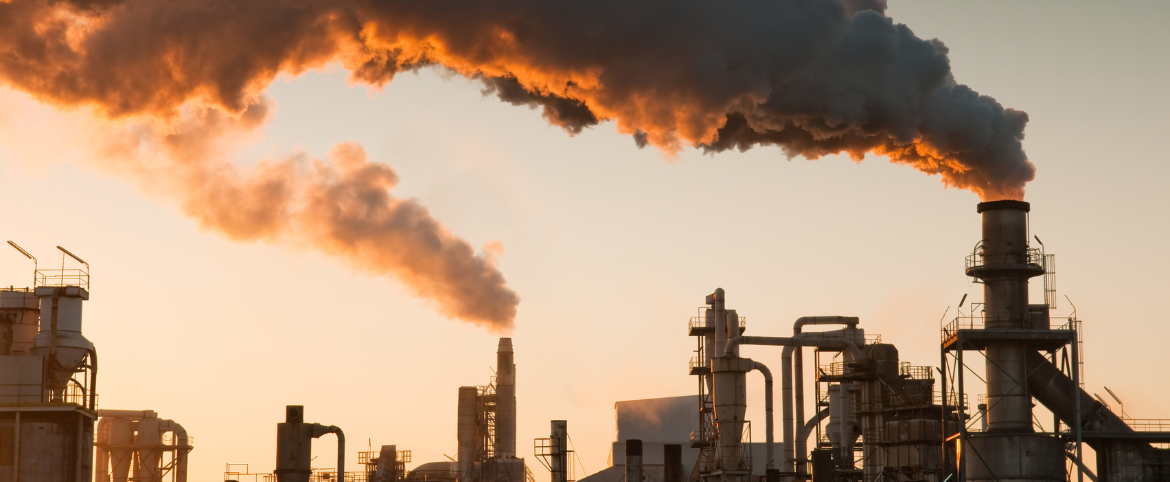
There was a time where the courts ruled by common law and were held separately and above the government. When an industrialist polluted a stream or the air in a way that caused physical or financial harm to his neighbours, the courts would force them to pay reparations and a penalty. This in itself did a pretty good job of deterring people from polluting:
Until the latter part of the nineteenth century this form of law, where the rights of every individual were considered, was successful, it stated that if you caused harm or law to another person it was your duty to restore them to their original condition and compensate them:
Then, as documented by Morton J. Horowitz in his two-volume treatise named The Transformation of American Law, the legal system began to change. Industrialists went to the government to have it changed to a more collectivist philosophy where lawyers and law makers became increasingly concerned with what was termed “the common good."
If you owned a rail track and the sparks from your trains lit the neighbouring farmer’s crops on fire, they’d have a claim against you. If you hung out your washing and the local smokestack covered your clothes in soot, you’d have a claim against them. This was a simple principle that acted as a deterrent.
"Under the individualist view the law should protect everyone's right to life, liberty and property – which includes the right not to have your body or property damaged by the pollution of others. The new legal system however argued that no individual or group of individuals should stand in the way of the economic progress of the entire community. Therefore a few victims of pollution should not interfere with economic development prospects that would benefit "The greater good.”" (Tom Dilorenzo)
So the collectivists in the government came along and said: “You selfish individual, don’t you know you’re holding back progress which is for the common good!” therefore a new precedent was accepted where people just had to accept a certain amount of harm from pollution, that was to be negotiated between the government and industry. The policy-makers would try to make a calculation and ascertain what was 'in the greater interests of society as a whole.'
Now there are several problems with that idea: one is there is no objective measure of what benefits society as a whole so where do you draw the line? Someone needs to make an arbitrary decision about it. The second problem is, even if you could measure this objectively, how on earth would you get policy-makers to enforce on the side of “the people” when lobbyists are rich and have full-time jobs that hinge upon securing benefits from polluting, and politicians rely on contributions from industry to fund their campaigns, while “the people” don’t have the free time or money to take the fight to courts!
When we consider history we find that governments, based on collectivist ideologies, stand with industry against the people, rather than with the people against government. If we want to solve problems of pollution, improve our air, water and food supply, it is not more government we need - rather, a return to the simple notion that individuals have rights, and industry does not have the right to pollute our air or water; that each of us has to be held responsible for cleaning up our own mess.
"For all its faults one thing the Government does is protect the environment from profit-seeking corporations, right?" - Anthony Sammeroff
Check out these recently published articles on Materia+.
I recently spoke with one of my health coaching clients. Her goal...
Nettle may be one of the most infamous plant medicines that I’ve...
Yoga, an ancient practice combining physical postures, breathing exercises, and meditation, has...
I had the amazing privilege of doing a group agricultural study abroad,...